In this intricate financial environment, the value of transparency and confidence in business activities cannot be underestimated. Organizations progressively recognize that their constituents, including shareholders, clients, and authorities, expect clarity regarding their financial condition and governance practices. This is where audit and assurance services play a crucial role. By providing objective evaluations of a company's financial statements and internal governance, these services help to establish trust in the precision and trustworthiness of financial reporting.
These services encompass a range of functions designed to evaluate and bolster the integrity of financial information. From external audits that evaluate the equity of financial statements to in-house audits that enhance operational efficiency, these services are crucial to fostering accountability and trustworthiness. As businesses navigate the difficulties of regulatory compliance and risk management, comprehending the significance of these services becomes critical for nurturing a environment of transparency and improving partner confidence.
The Role of Auditing Services
Audit services serve a critical purpose in increasing the integrity of financial reports. By providing an independent review of an organization’s financial records, auditors assist to ensure that the data presented is correct and conforming with pertinent laws and regulations. This validation instills confidence in stakeholders such as shareholders, lenders, and clients, who trust in the validity of these financial reports for decision-making .
Furthermore, auditing services have a major impact greatly to internal control assessment . Through in-depth evaluations of an organization's internal processes and systems, auditors can uncover weaknesses or flaws that may result in inaccuracies . By recommending improvements, auditing services not only promote compliance but also improve operational efficiency, in the end benefiting the organization's overall performance.
In the context of corporate governance , auditing services serve as a key oversight function. By maintaining an impartial stance, auditors reinforce accountability within organizations and ensure that management acts in the best interests of stakeholders . This outside scrutiny is critical for establishing trust in the financial framework, as it assures interested parties that the entity is managed openly and with integrity.
Types of Assurance Services
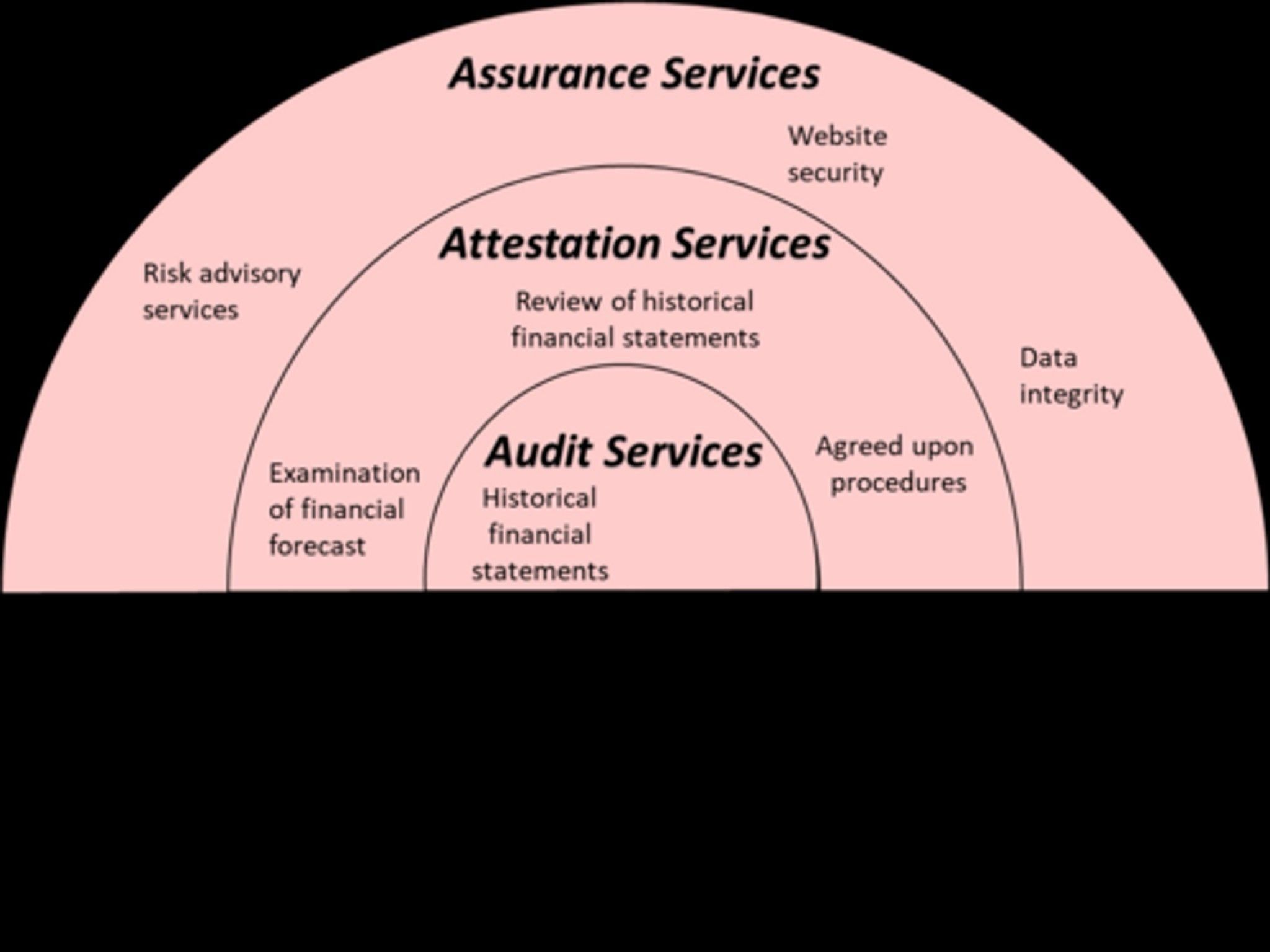
Assurance services can be divided into various categories, with each serving a specific purpose and providing different degrees of assurance. The most common types comprise audits, review engagements, and compilation services. An audit engagement involves an in-depth examination of financial statements and associated disclosures, aiming to provide a reasonable assurance that the financial reports are devoid of material misstatement. This intensive review ensures a high degree of reliability, which makes audits crucial for public companies and organizations looking to build credibility with investors.
Reviews provide a lower level of assurance as opposed to audits. In a review, the auditor conducts analytical procedures and inquiries to gain a sufficient degree of confidence about the financial documents. While not equivalent to an audit, a review supplies reassurance to users that the financial data is valid and adhering to applicable accounting standards. This service is often chosen by lesser companies that require some level of assurance but may not need the depth of a comprehensive audit.
Compilations constitute the simplest type of assurance services, where the accountant prepares the financial statements based on information provided by management and does not include any validation or analysis. The objective of a compilation is to show information in a organized manner, but it fails to offer assurance that the financial statements are void of significant inaccuracies. This service is often employed by minor enterprises that must show their financials to lenders or stakeholders but lack the need for an audit or review.
Benefits of Clarity in Audits
Openness in audits fosters a environment of accountability within companies. When evaluation and verification services are performed publicly, stakeholders can understand how financial information is gathered, analyzed, and communicated. This openness contributes to build faith among investors, clients, understanding that the organization abides to elevated criteria of honesty. As faith increases, it can trigger stronger partnerships and a better overall standing in the sector.
Moreover, transparent assessments enable better educated decisions. With lucid understanding into financial condition and operational effectiveness, leaders and investors can take strategic plans based on reliable information. This is particularly crucial for investors analyzing prospective hazards and benefits. By grasping the actual financial state of an entity through thorough and transparent audit methods, participants can conduct better effective planning and resource management.
In conclusion, clarity in audits plays a vital role in compliance with laws and risk management. Companies that embrace rigorous assessment and assurance services are more equipped to detect and tackle inconsistencies or possible problems beforehand. This not only lessens the chance of financial errors but also guarantees compliance with regulations, lessening the chance of sanctions or judicial problems. In this way, openness in assessments not only protects the entity but also contributes to the stability of the larger financial system.